 Shinechip
PIR vs IR Hand-Wave vs Touch: Cabinet Light Switch Types
Published 2026-11-01 · Shinechip engineering team
PIR detects body heat and needs a clear lens and a warm body in range; IR hand-wave detects a reflected infrared beam within a few centimetres and works behind thin non-metallic panels; capacitive touch detects a finger through glass or acrylic up to about 5 mm. Choose by how the user's hand reaches the light, not by price.
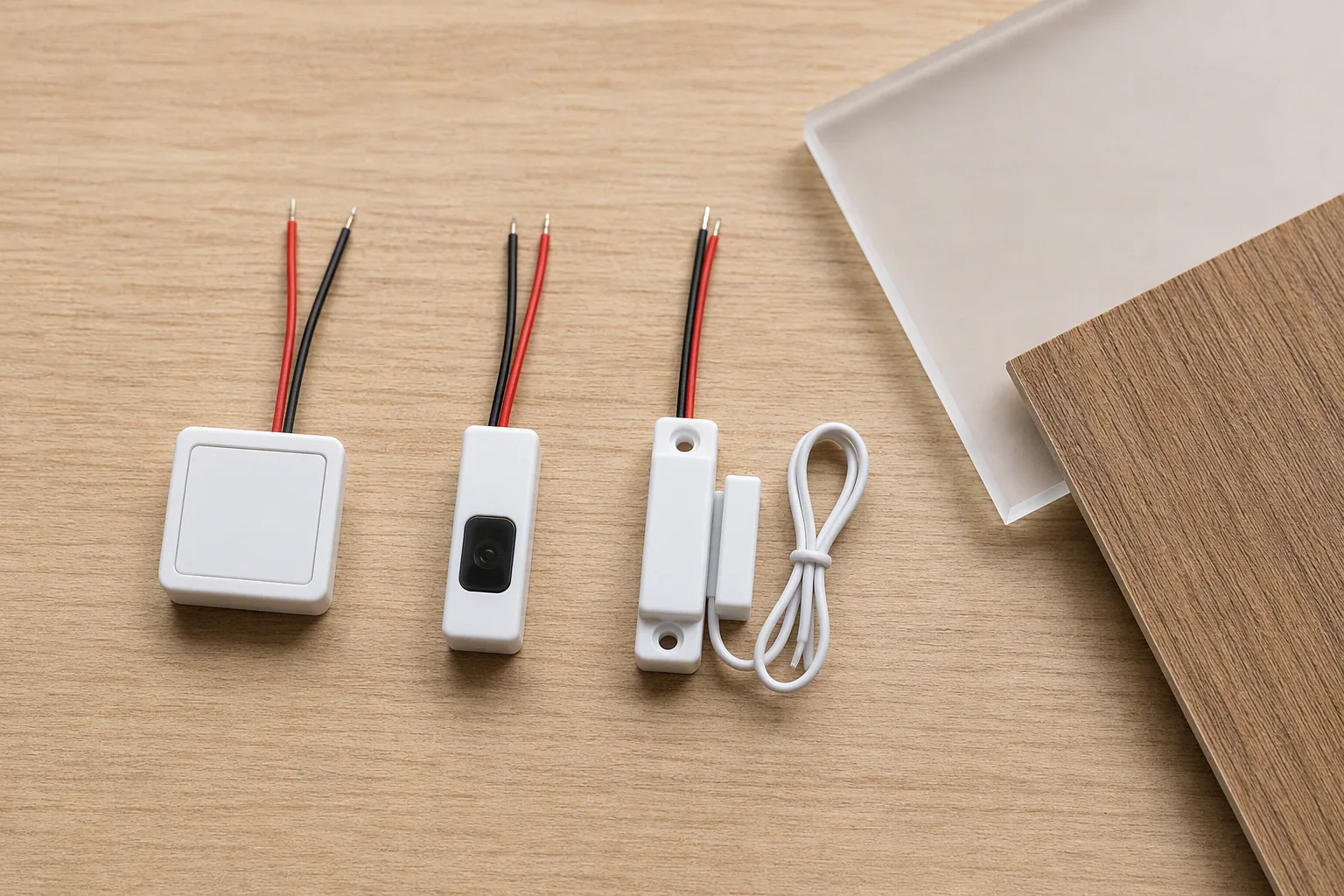
Three sensing methods in one line each
Passive infrared (PIR): a pyroelectric sensor sees the change in infrared radiation when a warm body moves across its field. Active infrared (IR hand-wave): an emitter and receiver pair look for the reflection of their own beam. Capacitive touch: an electrode measures the change in capacitance when a finger comes near, and can do it through a glass or acrylic panel.
All three switch a load the same way, so the difference is installation and behaviour: what the sensor can see through, how far away it works, and whether it reacts to presence or to a gesture.
PIR: body heat, line of sight
PIR needs a lens with a clear view of the area, usually 3-5 m and around 100-120 degrees. It reacts to movement, so a person standing still at a wardrobe can drop out of detection, and warm air from a duct, direct sun or a nearby oven can trigger it. It cannot sit behind metal, and behind glass it is unreliable.
Where it works well: walk-in closets, storage rooms, and cabinet runs where the sensor can be aimed along the aisle. Set the hold time to a minute or more, not the ten seconds many modules default to.
IR hand-wave: a short-range gesture switch
An IR hand-wave module emits a modulated beam and looks for its reflection. Typical reach is 3-15 cm, so the hand has to pass within that band. Because the beam passes through many non-metallic materials, the module can be mounted behind a thin wood veneer, MDF or acrylic panel with only a small window, which is why it is common on handleless furniture and splashbacks.
Limits: it will not work through metal, foil-backed board or thick dark glass; strong ambient sunlight can swamp the receiver; and it is a gesture sensor, not a presence sensor, so the light goes off when the hand leaves even if someone is still working. Door-sensor combinations exist for exactly that reason.
Capacitive touch: contact through a panel
A capacitive electrode behind a glass or acrylic front detects the finger through the panel. Working thickness is typically 1-5 mm and up to 6 mm on stronger modules. This is the standard choice for mirror fronts and furniture doors where the touch icon is printed or laser-etched on the surface.
Limits: water films and heavy condensation can cause false triggers, so bathroom and kitchen versions need an IP-rated, sealed module; a metal backing close behind the electrode reduces sensitivity; and the module needs a stable supply, since a sagging 12V rail makes the touch threshold drift.
Where each type fails on site
Metal cabinet or steel back panel: PIR and IR hand-wave both fail; use a touch switch on a non-metallic front or a mechanical switch. Dark tinted glass 8 mm thick: touch usually fails, hand-wave fails; specify a door sensor or a mechanical switch. Steam-heavy bathroom: unsealed touch modules false-trigger, so specify IP44 or better. Outdoor or unheated space: PIR sensitivity and battery-free modules drift, and condensation shorts unsealed boards. Several units side by side: PIR cones overlap and both lights come on, so narrow the lens or use door sensors.
A useful check before ordering: mount a sample on a scrap of the actual panel material at the actual thickness. Panel material is the single biggest cause of a sensor that tests fine on the bench and fails in the cabinet.
How to choose in four questions
One: does the user's hand touch the front (mirror, handleless door) or reach past an edge (cabinet interior)? Touch for the first, hand-wave or door sensor for the second. Two: what is the panel material and thickness? Non-metallic up to 5 mm opens touch and hand-wave; metal closes both. Three: is the space walked into or reached into? Walk-in closets want PIR or a door switch, not a gesture. Four: is there moisture? Then IP rating decides the model, not the sensing method.
Load and function come after that: on/off only, dimming, or 3-colour (CCT) stepping, and the rated current at the strip voltage. A 5 A module at 12V carries 60 W; the same module at 24V carries 120 W.
What to send with an RFQ
Panel material and thickness, mounting hole diameter or module size limit, supply voltage, total load in watts and amps, function (on/off, dimming, CCT, defogger output), cable length between module and strip, IP requirement, and quantity per year. A photo of the current installation and the panel edge saves a round of samples.
Figures are from our product listings or worked out from them. Check the specific model before installation.
Parts to use
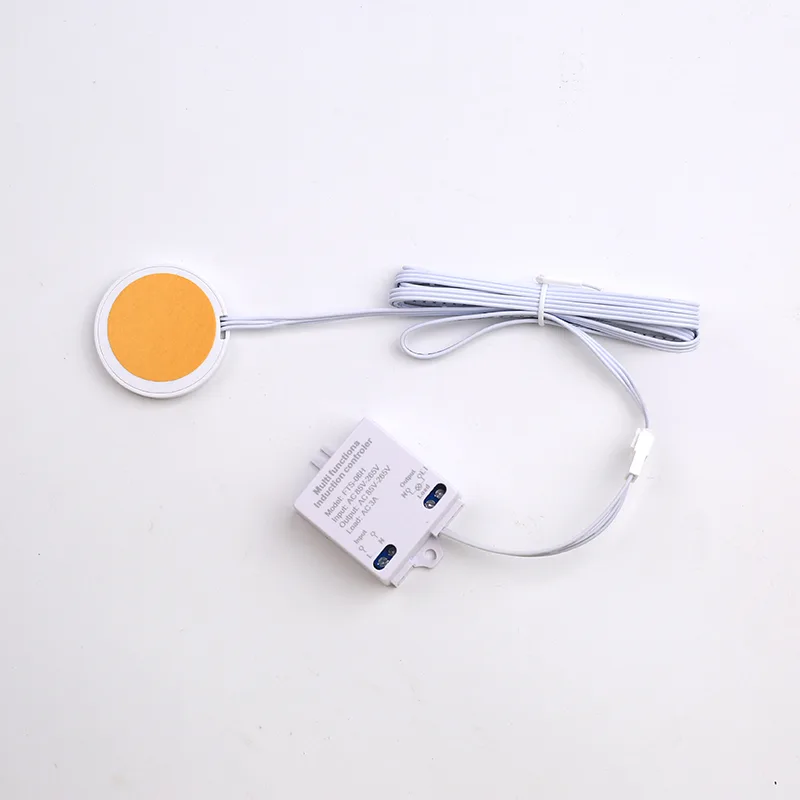 FeaturedFWS-6
FWS-6 Hidden Touch Switch for Furniture Lights, 12-24V 3A
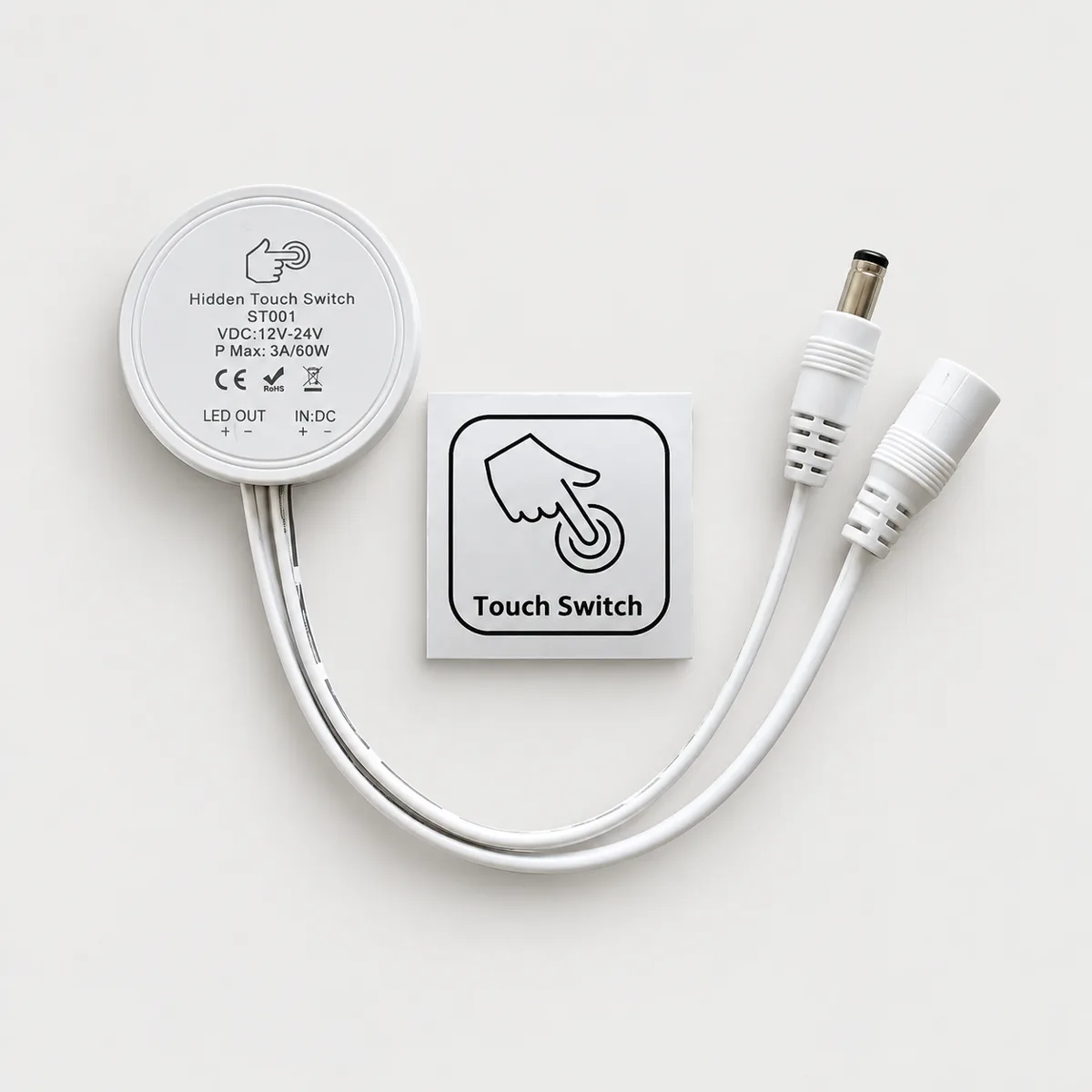 Featured▶ VideoSTD01
STD01 Hidden Proximity Hand-Wave Dimmer for Cabinets, 12/24V
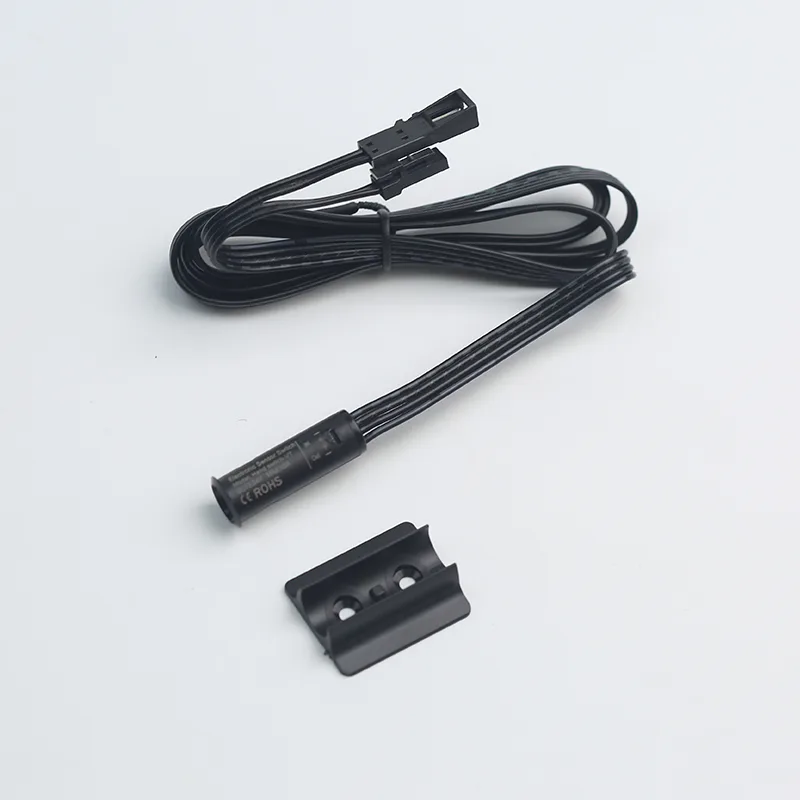 FeaturedFVD04-A-V2
FVD04-A-V2 IR Hand-Scan / Door Sensor Switch, 12/24V 60W
 FeaturedYTSMK001
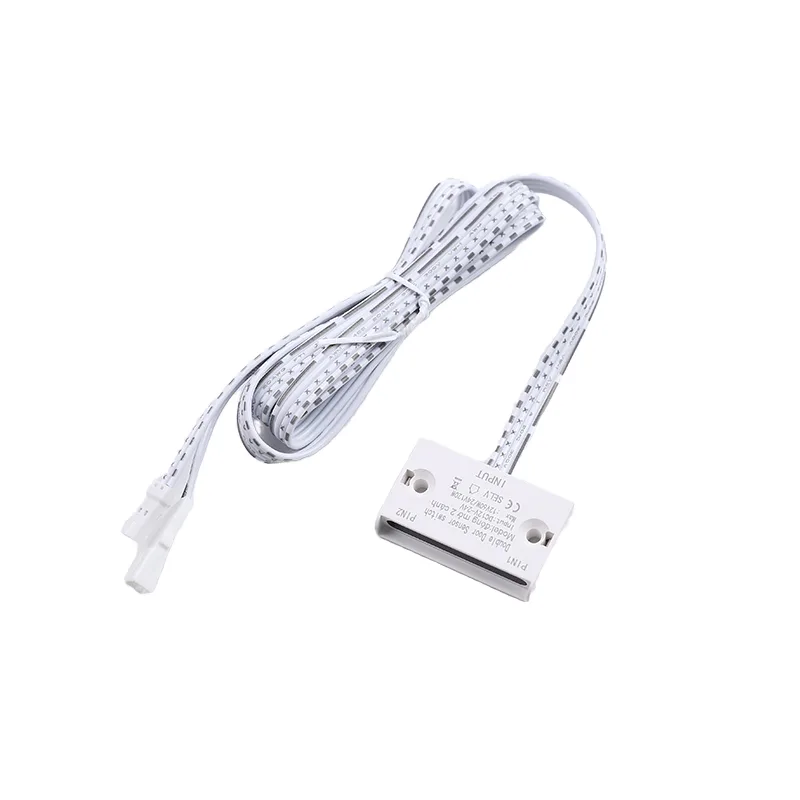
YTSMK001 IR Double-Door Sensor Switch, 12/24V 60W
Tell us what you are building
Send the switch type, voltage, load and quantity, or a photo of the switch you use today. We reply with model options, MOQ, price and lead time.