 Shinechip
LED Strip Flicker and Buzz on a Dimmer: Causes and Fixes
Published 2026-11-01 · Shinechip engineering team
Flicker almost always comes from a mismatch between the dimmer and the driver: a non-dimmable constant-voltage driver being chopped at the input, a dimmer below its minimum load, or a trailing-edge dimmer on a driver built for leading edge. Buzz comes from the same mismatch plus low PWM frequency and cheap output capacitors.
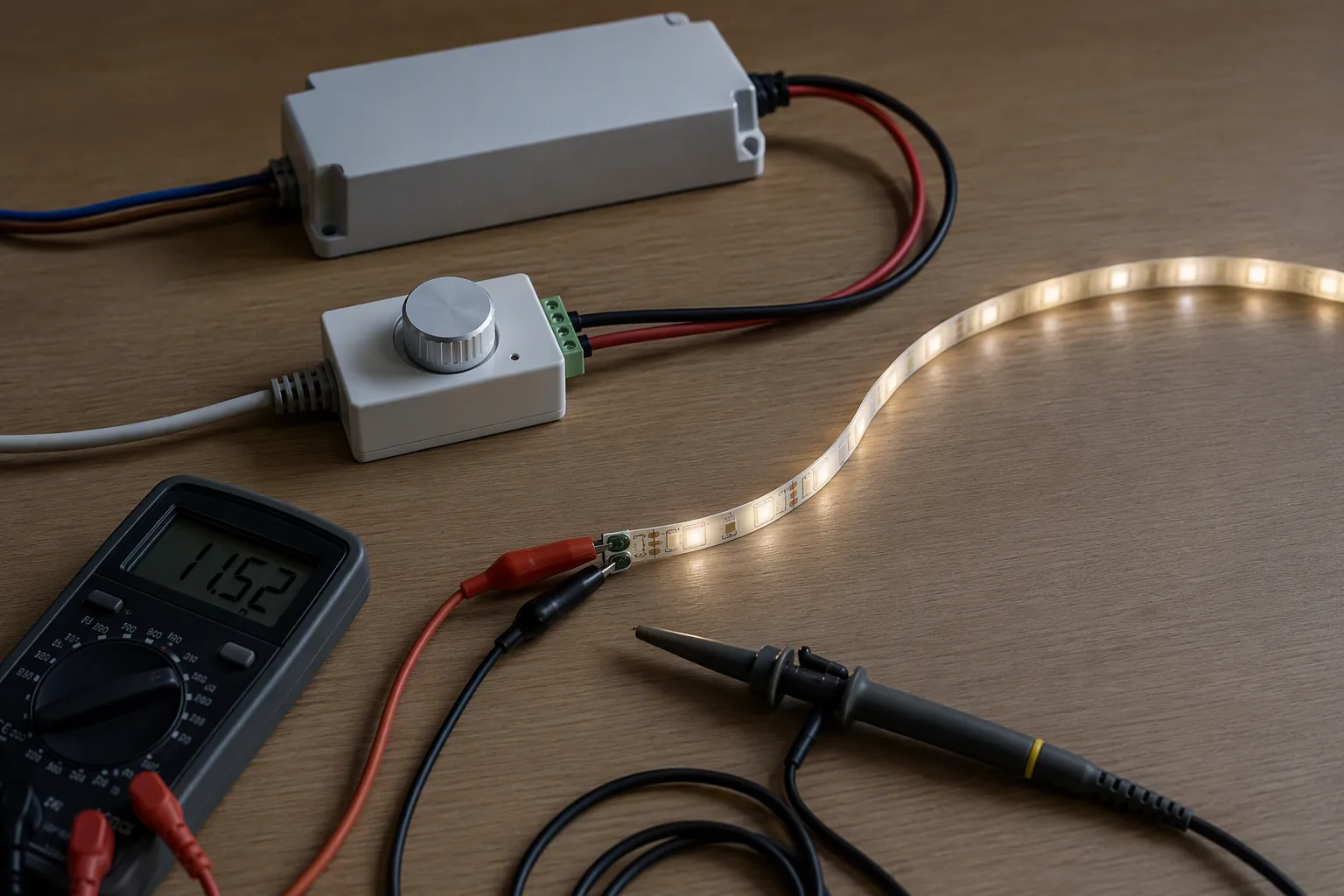
Start with the driver label, not the dimmer
If the driver does not say dimmable, no dimmer will make it behave. A non-dimmable constant-voltage driver is a switch-mode supply with a fixed regulation loop; when a triac dimmer chops its mains input, the loop loses regulation for part of every half cycle and the output dips. On a strip that shows up as flicker at low levels, drop-out below about 20%, or a visible shimmer on camera.
The fix is a driver specified for the dimming method being used, with the minimum load stated. One line on the datasheet decides it; the dimmer's marketing copy does not.
Leading edge vs trailing edge
Leading-edge (triac) dimmers were designed for incandescent and magnetic loads. They chop the start of each half cycle and need a minimum current to latch, which is why they are paired with a minimum load and often with a load resistor. Trailing-edge (ELV) dimmers chop the end of the half cycle and suit electronic drivers. 0-10V, DALI, DMX and PWM dimming avoid mains chopping altogether and are the reliable choice for commercial jobs.
A trailing-edge dimmer on a driver designed for leading edge (or the reverse) usually produces buzz first, then flicker, then early driver failure from repeated inrush.
Minimum load and dead travel
A 400 W dimmer with a 5 W strip on it is below the minimum load of most triac circuits: the first 10-20% of rotation does nothing, then the strip jumps or flickers. Either add load, use a lower-rated dimmer, or move to a driver with a low-voltage dimming input where the dimmer only carries a control signal.
Mirror and cabinet installs hit this constantly because the loads are small. A 1.2 m strip at 9.6 W/m is 11.5 W; that needs a dimmer rated for a few hundred watts at most, or one with a stated minimum below 5 W.
Buzz: PWM frequency and capacitors
LED strips are dimmed by pulse-width modulation. Below roughly 200 Hz the eye sees the flicker; between 200 Hz and about 1 kHz the driver's inductors and capacitors can sing at the switching frequency, and the strip itself can hum from magnetostriction in the copper. Above about 20 kHz the noise is out of hearing range.
So a buzz that follows the dim level is usually the driver's switching frequency landing in the audible band, made worse by low-grade output capacitors and by a thin metal housing that resonates. Better drivers specify PWM at 1 kHz or higher, or use constant-current output with analogue dimming.
Wiring faults that look like dimmer faults
Long, thin cable to the strip causes a voltage sag under load: 5 m of 0.5 mm2 at 3 A drops about 1V, and a 12V strip at 11V dims and shifts warm. At low dim levels the driver may also hit its current limit and pulse. Measure at the strip terminals under load, not at the driver.
A shared neutral with other dimmed circuits, a dimmer on the neutral instead of the live, or a switch loop with a neon indicator can all inject enough leakage to make a strip glow when it should be off. Two-wire dimmers without a neutral leak a small current by design, which is fine for a bulb and not always fine for a 12V driver.
The five checks that solve most cases
One: is the driver marked dimmable, and for which method? Two: is the load above the dimmer's minimum? Three: does the dimmer and driver protocol match (leading edge, trailing edge, 0-10V, PWM)? Four: what is the voltage at the strip under load? Five: is the strip within the driver's rating at full brightness with 20% headroom? In our experience those five answer the majority of complaints before any part is replaced.
What to specify to avoid it next time
Dimmable constant-voltage driver matched to the dimmer protocol; stated minimum load; 24V for runs over about 2 m or over 60 W; PWM at 1 kHz or higher (20 kHz for bedrooms and quiet rooms); cable sized for the current at the actual length; and a driver with 20% headroom so the regulation loop is not working at its limit.
Figures are from our product listings or worked out from them. Check the specific model before installation.
Parts to use
 Featured▶ VideoTD100
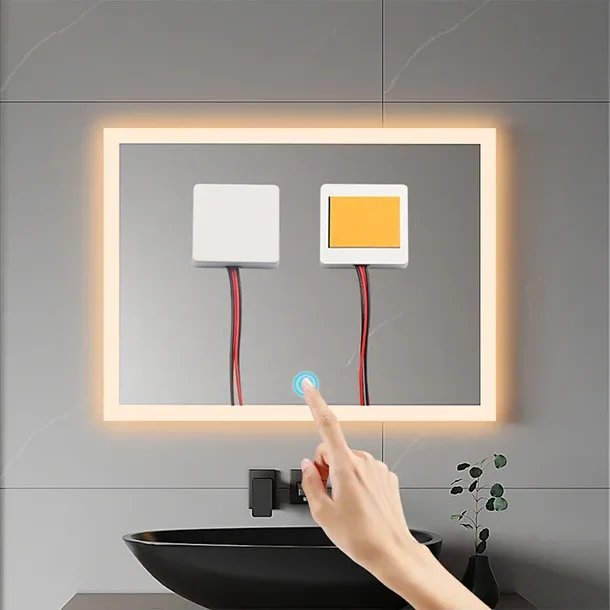
TD100 / TD100D Mirror Touch Dimmer Switch, 12-24V DC
 Featured
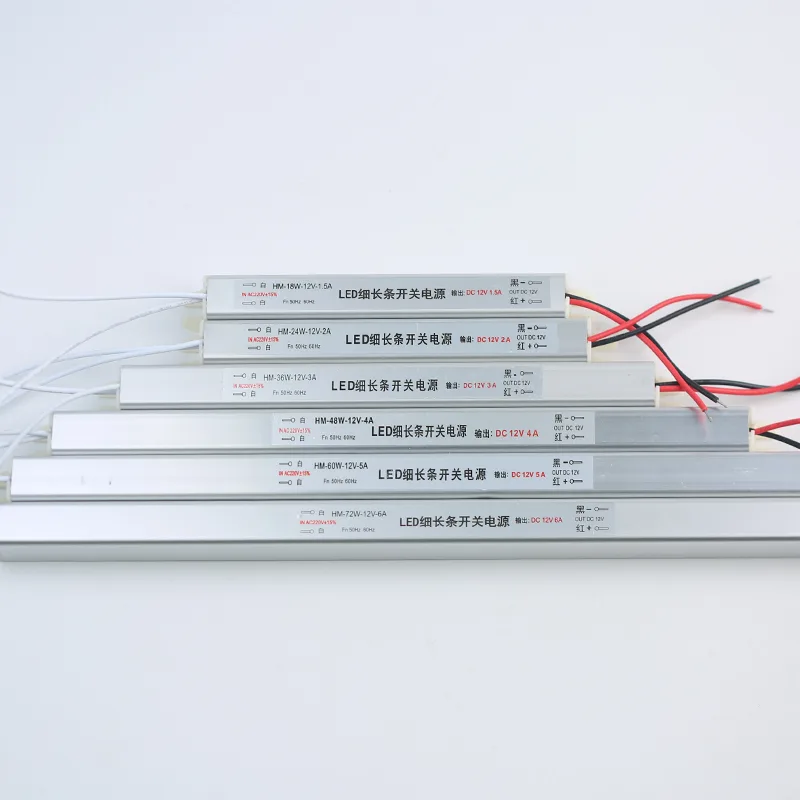
HM Slim 12V LED Power Supply, 18W to 72W, 220V AC Input
 TSP-2835-120-8
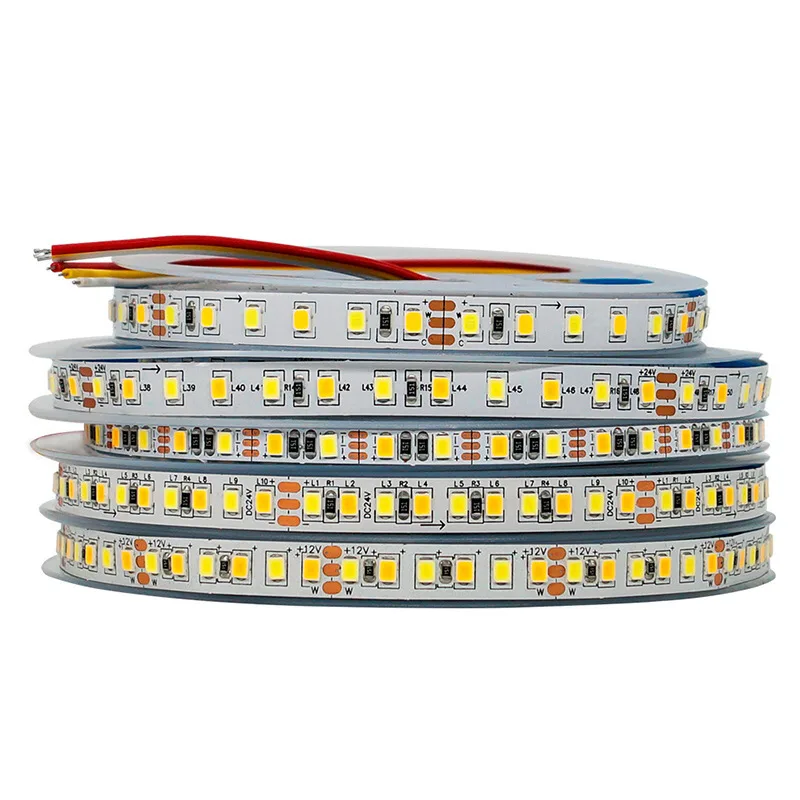
 SMD2835 LED Strip with Remote, 12V 9.6W/m
Tell us what you are building
Send the switch type, voltage, load and quantity, or a photo of the switch you use today. We reply with model options, MOQ, price and lead time.