 Shinechip
LED Mirror Touch Switch Not Working: Causes and Fixes
Published 2026-10-09 · Shinechip engineering team
When an LED mirror touch switch is not working, the cause is usually one of four things: no power reaching the module, the sensor no longer pressed flat against the glass, a load above the switch rating, or moisture behind the mirror. Check them in that order, starting with the power, before you replace the switch.
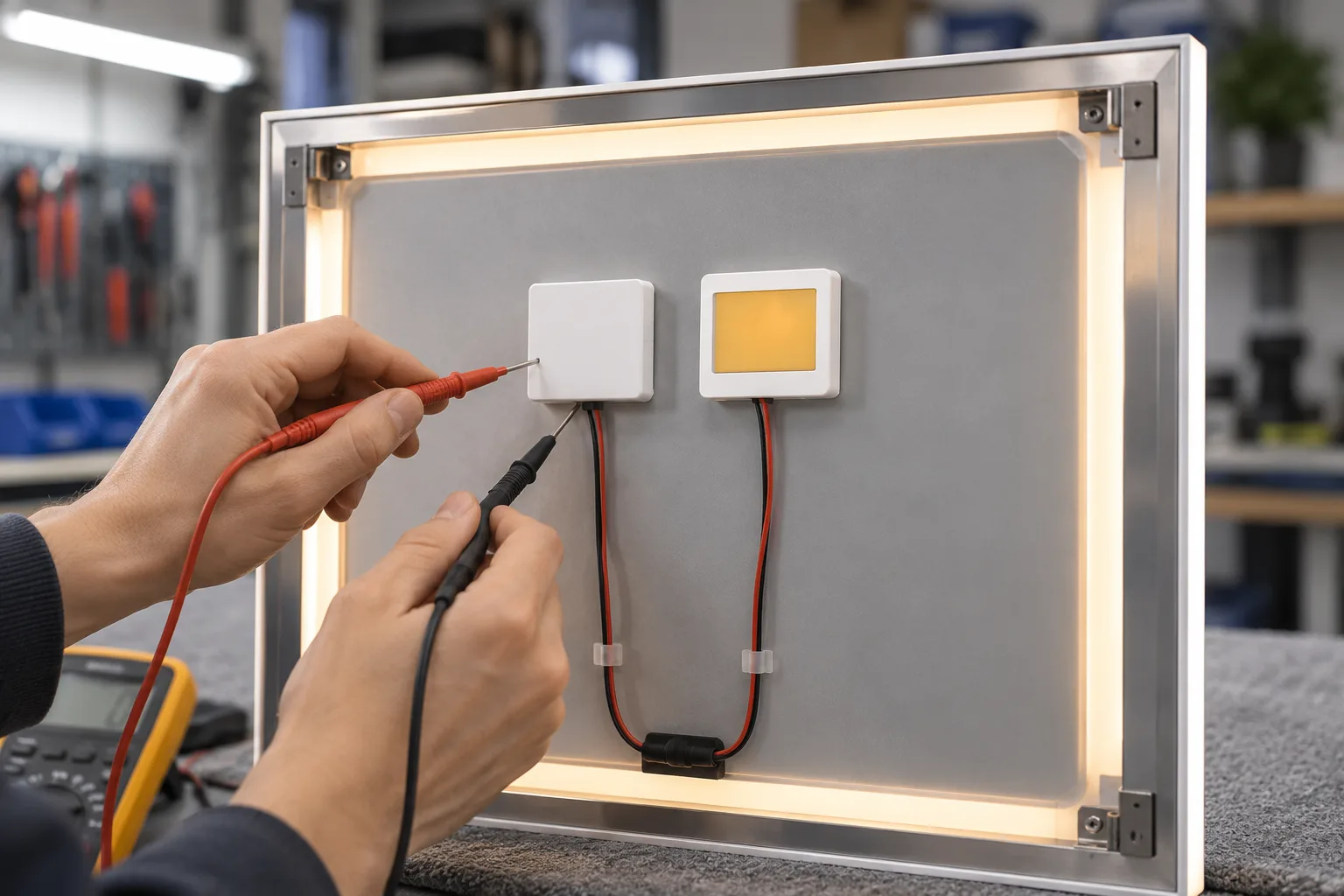
- Why does my LED mirror not respond to touch at all?
- Why does the indicator light up but touch does nothing?
- Why does the mirror light turn on or off by itself?
- Why does the light flicker or cut out at full brightness?
- Why does the switch turn the light on but not dim or change colour?
- When should the touch switch be replaced?
- How can mirror makers prevent touch switch failures?
Why does my LED mirror not respond to touch at all?
If nothing happens and the switch indicator is dark, the module is not getting power.
Cause: a tripped circuit, a loose plug, a failed LED driver, or a broken lead between the driver and the switch.
How to check: first confirm the socket or circuit is live. On a low-voltage switch, such as the TD100 / TD100D touch dimmer (12-24V DC), measure the driver output with a multimeter; it should read the driver's rated DC voltage. On switches with a built-in driver, such as our single-button three-colour mirror touch switch with a 12W driver, the input is AC 110-240V, so testing must be done by a qualified electrician with the mirror isolated.
How to fix: reconnect or replace the faulty lead or driver. Many of our mirror switches have a white or blue indicator light, so a lit indicator after the repair tells you the module now has power.
Why does the indicator light up but touch does nothing?
If the module has power but ignores your finger, the sensor is usually no longer in contact with the glass, or the glass is outside its rated thickness.
Cause: the adhesive pad has lifted with heat and humidity, the module has slid away from the touch icon, or the mirror glass is thicker than the switch supports. Most of our mirror touch switches, including the TSP-001 / TSP-001D and TD100 series, are listed for 1-5 mm glass. The TSP-001 IP65 version is listed for 1-7 mm.
How to check: open the back of the mirror and look at the module. It should sit flat on the glass, directly behind the touch icon, with no gap. Measure the glass thickness and compare it with the listing.
How to fix: clean both surfaces, refit the module with fresh double-sided adhesive and press it flat. For glass thicker than the switch supports, change to a model rated for that thickness. Check that no metal foil, tape or frame part sits between the module and the glass.
Why does the mirror light turn on or off by itself?
Random switching usually comes from moisture, electrical interference near the sensor lead, or an unstable supply.
Cause: condensation behind the mirror, a sensor lead running beside mains cables or a defogger pad, or a driver close to its limit.
How to check: note when it happens. If it happens after showers, suspect moisture. The mirror switches listed here are mostly IP20 or IP22, which suits a dry position behind the glass, not a damp one. If it happens when another load switches on, suspect interference.
How to fix: seal the back of the mirror so steam cannot reach the module, reroute the sensor lead away from mains wiring and the pad, and fit a driver with enough capacity for the full load. For mirrors that will see more humidity behind the glass, consider the TSP-001 version listed as IP65.
Why does the light flicker or cut out at full brightness?
Flicker or cut-out at high brightness usually means the strip draws more than the switch or driver can supply.
Cause: a longer strip, a CCT strip running two channels, or a defogger pad on the same output pushes the load above the rating.
How to check: add up the strip watts and divide by the voltage. A 12W switch at 12V supplies 12 W / 12 V = 1 A. A strip drawing 24 W at 12V needs 24 W / 12 V = 2 A, double that rating. Compare your figure with the switch: TSP-001 / TSP-001D and the 12V 12W one-colour dimmer are rated 12W, the TD102D is rated 36W (3A), and the SCQJ is rated 60W.
How to fix: move to a switch and driver rated above the total load, or split the strip across two outputs.
Why does the switch turn the light on but not dim or change colour?
If on and off work but dimming or colour change does not, the switch model and the strip type usually do not match.
Cause: a single-colour switch fitted to a three-colour (CCT) strip, or a CCT switch wired to only one channel. For example, the TSP-001 dims a single-colour strip, while the TSP-001D adds three-colour adjustment on the same touch point. The SCQJ is an on/off touch switch, not a dimmer.
How to check: compare the model number on the module with the strip. A CCT strip has separate warm and cool white channels; a single-colour strip has one.
How to fix: fit the matching version, such as the TD100D or TD102D for three-colour mirrors, and connect each strip channel to the matching output. On dimming models, holding the touch point dims, while a short tap switches on and off.
When should the touch switch be replaced?
Replace the switch when the correct voltage reaches its input, the module sits flat on glass within its rated thickness, the load is within rating, and it still does not respond.
At that point the sensing circuit or the internal driver has most likely failed, and repairing a sealed module is not practical. Order the same model, or tell us the glass thickness, input voltage, strip type and total load, and we will suggest a replacement that fits the existing wiring.
How can mirror makers prevent touch switch failures?
Many field failures can be prevented at the design stage by matching the switch to the glass, the load and the room.
Specify the glass thickness and check it against the switch listing. Calculate the total load of strip and defogger with watts / volts = amps and choose a rating above it. Choose single-colour or CCT switches to match the strip. Seal the mirror back against steam, keep sensor leads away from mains and heater wiring, and bond the module with an adhesive that holds in a warm, humid bathroom. Any mains-side wiring in production or on site must be done with the power off and by qualified staff.
Figures are from our product listings or worked out from them. Check the specific model before installation.
Parts to use
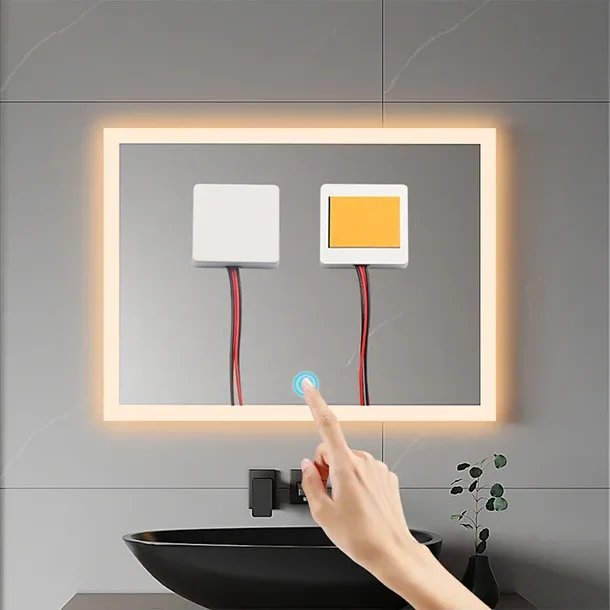 Featured▶ VideoTD100
TD100 / TD100D Mirror Touch Dimmer Switch, 12-24V DC
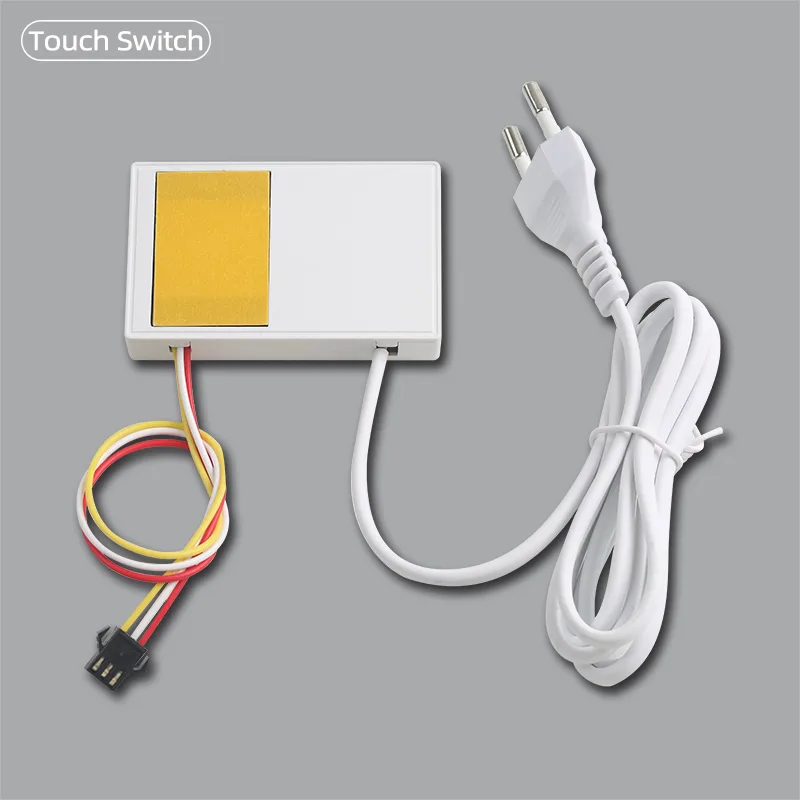 ▶ VideoTSP-001
TSP-001 / TSP-001D Mirror Touch Switch, 12V 12W
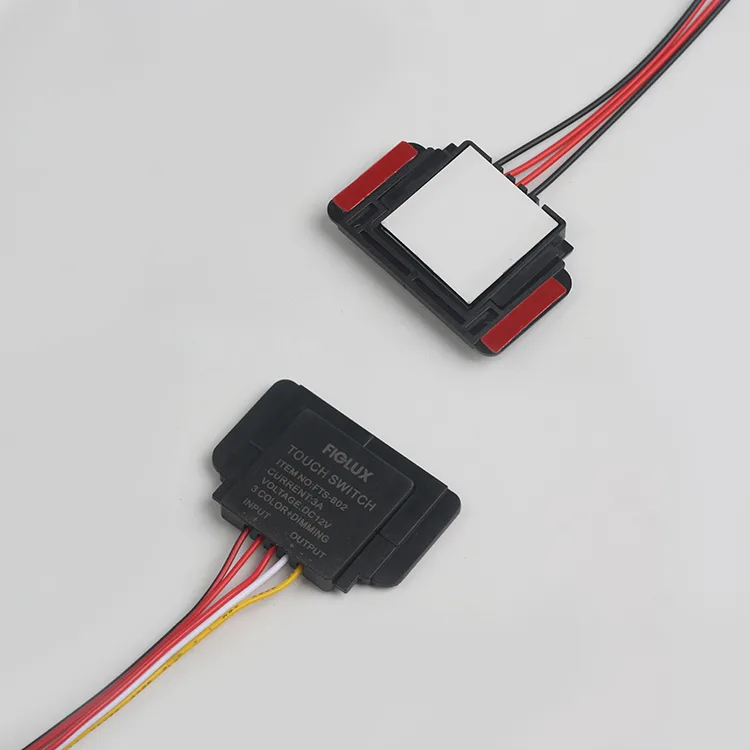 FeaturedTD102D
TD102D 3-Colour Mirror Touch Dimmer, 12V 36W IP22
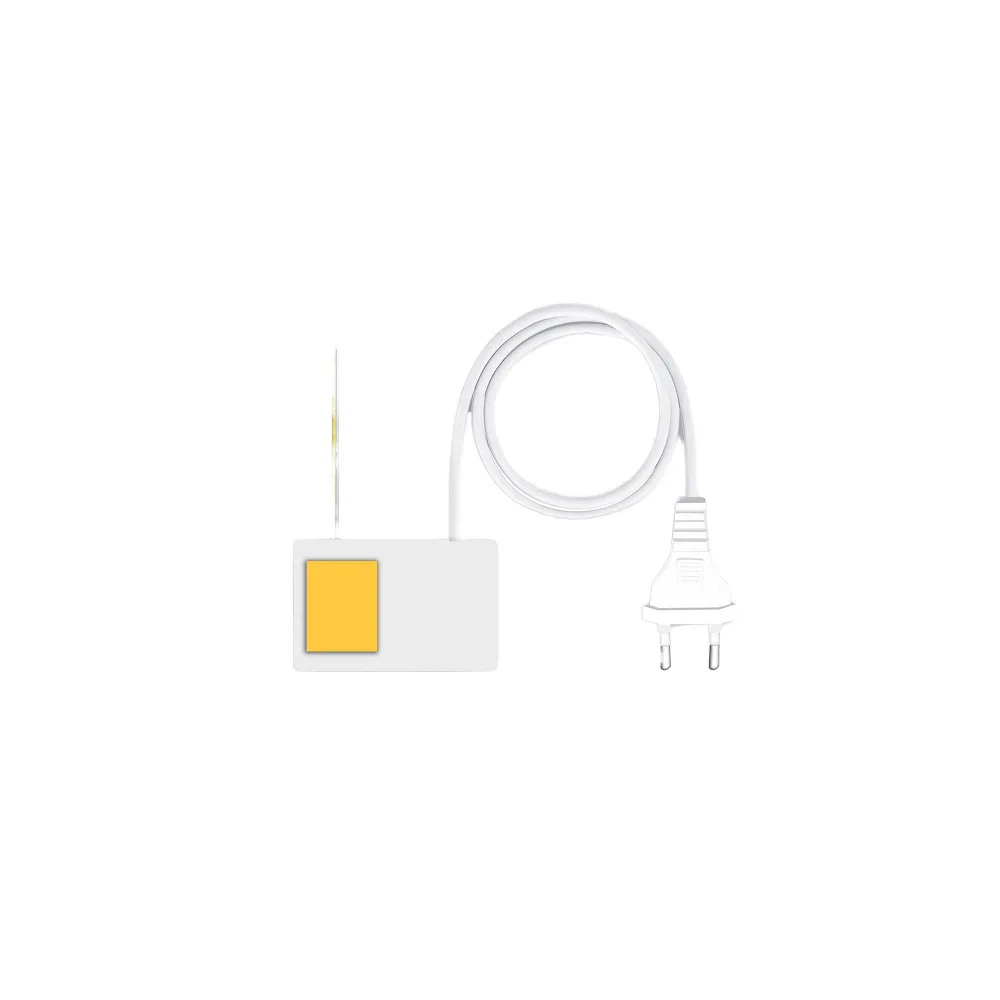 TSP-001
 Mirror Touch Dimmer, 12V 13W, IP65, 1-7 mm Glass
Tell us what you are building
Send the switch type, voltage, load and quantity, or a photo of the switch you use today. We reply with model options, MOQ, price and lead time.