 Shinechip
How to Size an LED Driver for a Mirror or Cabinet Light
Published 2026-11-01 · Shinechip engineering team
Size the driver on the total connected load, not on the switch rating: add up the strip watts per metre times the length, add about 1 W for the switch electronics, then pick a driver rated at least 20% above that figure. A 24V driver at the same wattage carries half the current of a 12V one, which is why long runs and higher loads are usually specified at 24V.
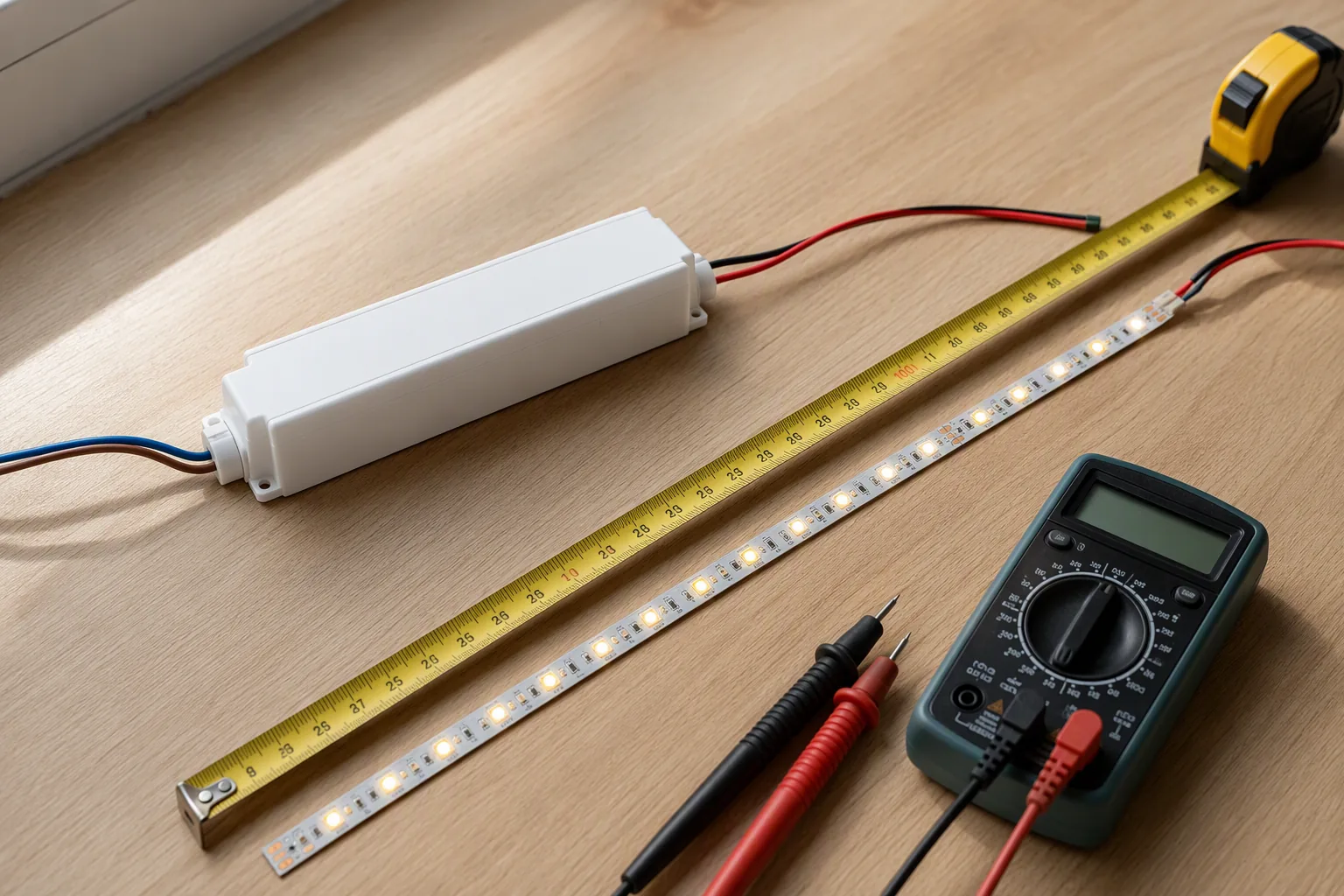
What the driver actually has to supply
An LED strip is a constant-voltage load. The driver holds 12V or 24V across the strip and the strip draws whatever current its wattage needs at that voltage: amps = watts / volts. A 12V strip rated 9.6 W/m and cut to 1.2 m draws 11.5 W, which is 0.96 A at 12V or 0.48 A at 24V.
Two things sit on top of the strip figure. The switch or controller electronics take a small amount, typically under 1 W. Cable loss adds a few percent on long runs. Neither changes the order of magnitude, but both matter when a driver is already close to its limit, which is why the usual practice is to size at 120% of the calculated load and never below 110%.
Worked example: a 1.2 m mirror light
Take a 1.2 m run of 12V strip at 9.6 W/m: 11.5 W. Add 1 W for a touch dimmer module: 12.5 W. With 20% headroom the driver needs to be good for about 15 W, so a 12V 24 W (2 A) driver covers it with margin and stays cool inside a mirror back where there is no airflow.
A defogger pad does not belong on that driver. A 300 x 400 mm pad is commonly 40-60 W on its own, which would double or triple the load; pads are normally specified on a separate mains circuit or on a dedicated defogger output. If a single driver has to carry both, size on the sum and check the switch's total rating, not just its LED output rating.
12V or 24V: what actually changes
For the same wattage, doubling the voltage halves the current. A 60 W run is 5 A at 12V and 2.5 A at 24V. Half the current means half the voltage drop in the cable, roughly a quarter of the heat per metre in the conductors, and thinner cable for the same result.
Both remain inside the 60V DC SELV limit, so neither is a safety upgrade over the other. The practical rule we use: 12V for short runs under about 2 m and under about 30 W, 24V once the run passes 2-3 m, passes about 60 W, or when the driver has to sit far from the strip. Check the switch as well: most mirror and cabinet switches are rated 12-24V DC, but the load rating at 24V is sometimes lower than at 12V.
Voltage drop: the number most installs get wrong
Copper resistance is about 0.0172 ohm per metre per mm2 of cross-section. A 0.5 mm2 lead is therefore about 0.034 ohm per metre, and the current has to travel out and back, so double the length. Five metres of 0.5 mm2 at 3 A gives 3 x 0.034 x 10 = about 1.0V lost, which is 8.5% of a 12V supply. The strip at the far end visibly dims and shifts colour.
Keep the drop under about 5% (0.6V at 12V, 1.2V at 24V). In practice: move the driver closer, go up one cable size, or switch the run to 24V. Measure at the strip terminals under load rather than at the driver output; the difference is the number that matters.
Constant voltage or constant current, and the dimming question
Strips and most cabinet modules are constant voltage (CV) and need a CV driver rated at the strip voltage. COB downlight engines and some mirror panels are constant current (CC) and need a driver with a matched current, typically 300-700 mA; a CV driver will not run them correctly.
Dimming compatibility is decided by the driver, not the dimmer alone. A trailing-edge or 0-10V dimmer on a non-dimmable CV driver will flicker, buzz or drop out at low levels, because the driver simply chops its input. Specify a dimmable driver, match the dimming protocol, and check the dimmer's minimum load. More detail is in our flicker and buzz guide.
IP rating follows location: IP20 inside a cabinet or behind a mirror, IP44 or better where condensation or cleaning water reaches the driver. A driver in a bathroom mirror back sits in the dampest place in the room.
Ordering checklist
Voltage of the strip (12V or 24V). Watts per metre and the exact length. Total load including switch electronics. Driver output with 20% headroom. Cable length and cross-section from driver to strip. Dimming protocol if any. IP rating. Connector type and whether the driver must fit inside the mirror back or a cabinet plinth. Whether a defogger is on the same circuit (it should normally have its own).
Send those nine lines and a photo of the strip label, and any supplier can quote a correct driver in one reply instead of three.
Figures are from our product listings or worked out from them. Check the specific model before installation.
Parts to use
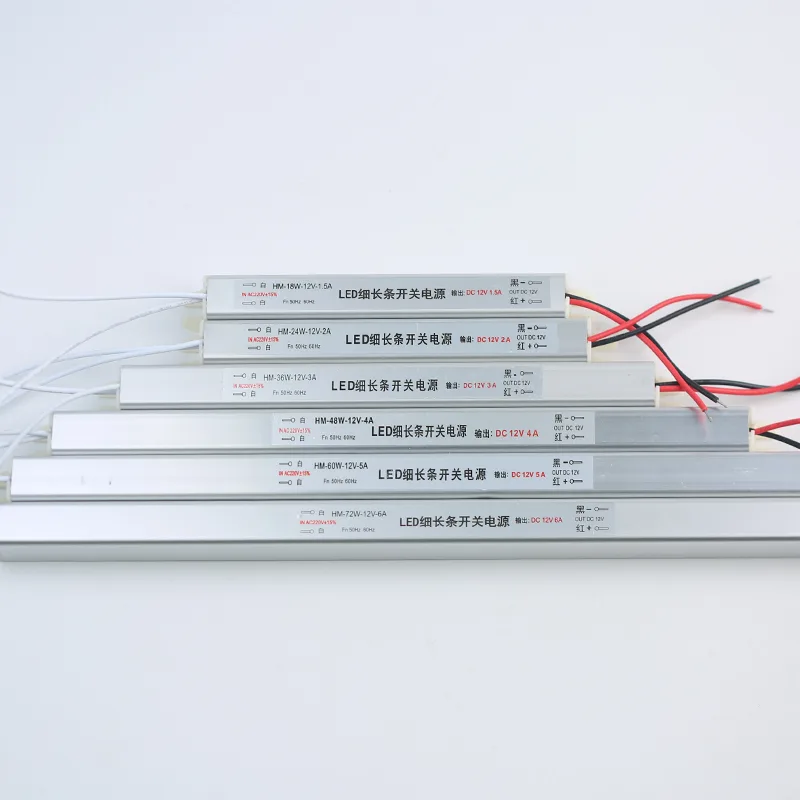 Featured
HM Slim 12V LED Power Supply, 18W to 72W, 220V AC Input
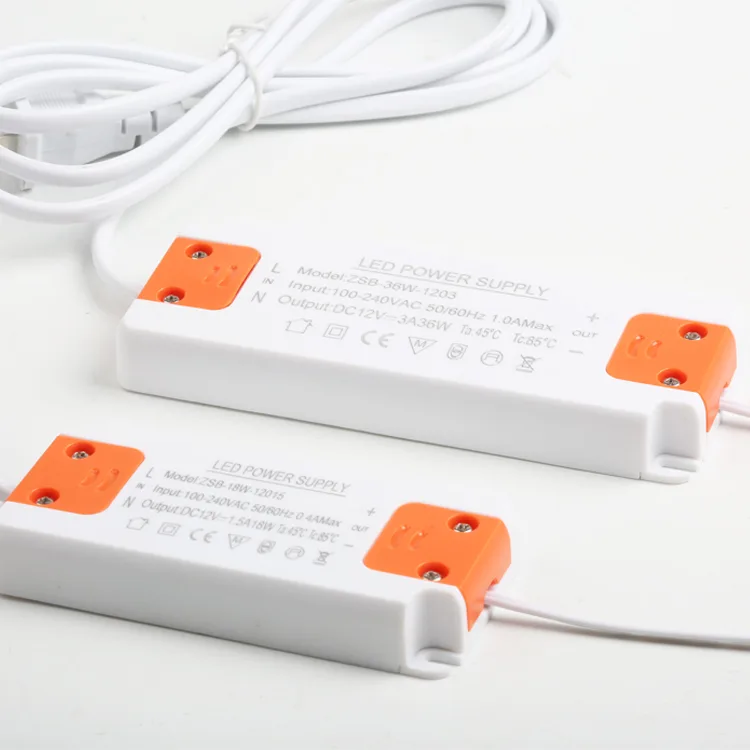 Featured
Ultra-Thin 12V LED Transformer for Cabinet Lighting, 24-60W
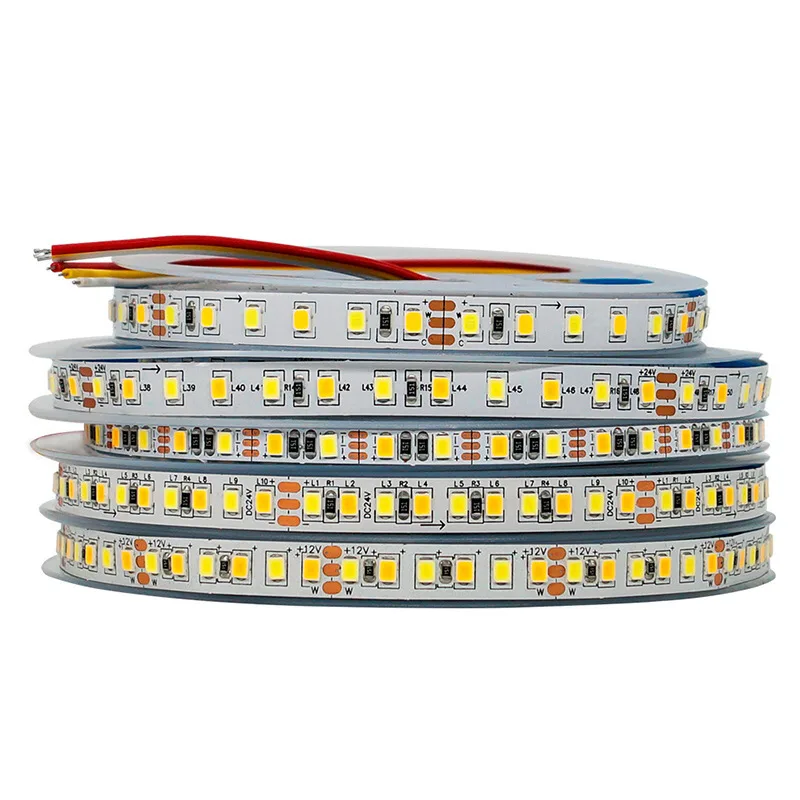 TSP-2835-120-8
 SMD2835 LED Strip with Remote, 12V 9.6W/m
 Featured▶ VideoTD100
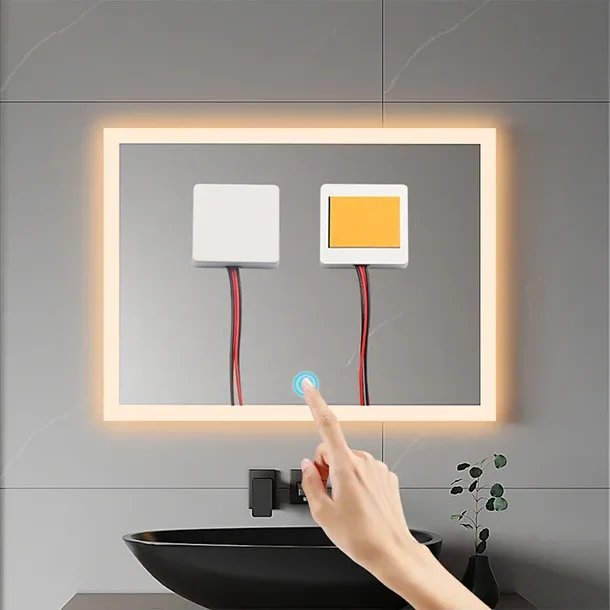
TD100 / TD100D Mirror Touch Dimmer Switch, 12-24V DC
Tell us what you are building
Send the switch type, voltage, load and quantity, or a photo of the switch you use today. We reply with model options, MOQ, price and lead time.